n order to interpret music traditions of Africa, one must first understand its cultural dynamics. Africans pass traditions and cultures down from one generation to the next – orally. Where Western culture and civilization are generally written down, most of Africa’s history is unwritten. The culture is orally preserved. Its core essence is embedded within tightly kept secrets never revealed to outsiders.
Man or womanhood preparation is attained at secret societies where initiates learn traditional ethics and skills related to father and motherhood. At first glance, African traditions seem plain to the untrained eye of people who cannot interpret it. Tribal Africans worship God and consort with ancestral spirits for guidance. Tribal ancestors are appeased in thanksgiving and favor requisite ceremonies depending on the particular occasion that’s taking place.


 When US President Barack Obama went to the Sub-Saharan region, he made his visit a symbolic one by visiting one of Ghana’s most heart rending monuments known as the fortress of Cape Coast Castle. Enchained Ghanians had been crammed into its dungeons and shipped out through its “Door of No Return” which opened into the sea where slave ships awaited.


 Cameroon has 250-300 distinct groups, and an estimated 300+ languages. Cameroon is divided into several provinces, which are dominated by specific ethnic or religious groups. Ethnic divisions often correspond to geography, which is also widely varied. Religious differences often correspond to colonial or other historical influence.[


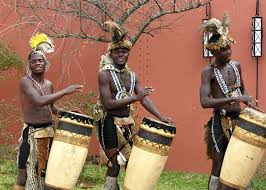


Man or womanhood preparation is attained at secret societies where initiates learn traditional ethics and skills related to father and motherhood. At first glance, African traditions seem plain to the untrained eye of people who cannot interpret it. Tribal Africans worship God and consort with ancestral spirits for guidance. Tribal ancestors are appeased in thanksgiving and favor requisite ceremonies depending on the particular occasion that’s taking place.
What this means is a traditional African will evoke the help of his or her dead tribal ancestors, guardian spirits or God to aide in every aspect of his or her life. Blessings are perceived as reward and favor from the divine, while persistent ill luck is seen as retribution for known or unknown discourtesy. Because of the tropical atmosphere, most African regions have two seasons – the rain season and the dry season. Some areas have harmattan weather.
Harvest is anticipated to flourish after the rain season but there may be devastation from flood. The dry season bears little to no crops while cattle wither lean from scarce water supply and the hot burning sun. African music (drum beating, singing, playing handmade instruments and clapping) and dance varies by region and is distinguishable by the specific ceremony. In each region, each ceremony determines which dance, drumbeat or song to be sang
Most Africans are either Christians, Muslims or traditional Africans. Dancing is a way to celebrate child birth, good harvest, marriage, victory at war or answer to prayers. Dancing can also lament death, loss at war, drought, famine, hard luck or curse etc. Music entertainment is common, some dances have a sexual connotation. Here are 10 distinct African music and dance cultures:
1. THE GAMBIA:
One of the main Gambian musicology is a very unique sound called Mbalax Music and Ndaga dancing. Gambia’s main tribes are: Sarahule, Mandinka, Wolof and Jola. Each of which have their own traditional music. The Mandinkas play the Kora lute when singing. The sad case in Africa today is mainstream pop culture’s attribution of materialism with financial success has leads some African musicians to abandon traditional melodies for a westernized pop sound. Some have adopted to Reggae music. However, The Gambia is one of few countries that maintains its traditional music and dance culture. The Gambia is a small West African country surrounded by Senegal. Their major export is peanuts, which leaves the economy to rely on tourism. The Gambia remains one of few peaceful countries in Africa. In history, The Gambia is known as the place where Kunta Kinte was abducted from. Kunta, a beloved son with great promise in his proud Mandinka tribe languished in the United States where his foot was amputated to prevent him from trying to escape slavery
In anguish Kunta told his slave wife and daughter proud stories of his beloved Gambia. Generations of his descendants would tell this story as their family legend. Meanwhile, in Africa, his family also mourn his abduction and their descendents told similar stories of the beloved Kunta whose life and promise was cut short by slave abduction. A chance encounter would later bring both descendants from the United States and The Gambia together. This story spawned the theme of the most watched television series in history, ROOTS. Today, the village of Joffrey is a tourist attraction in The Gambia where one can meet Kunta Kinte’s Gambian relatives
2. SOMALIA
As I stated earlier, African music is indigenous to the region based on cultural similarities. But when you take a closer look, you will find where one culture differs from the other. Most traditional Somali music is played with the Kaban and drums over poetic love lyrics sang in the local Somali language.
When the music world takes a dive into African music, one country with a vast traditional music culture that is often overshadowed by its reputation of war is Somalia. Somalia is a Federal republic that was dominated by the British and Italians. Located in the horn of Africa this country’s unique position gave it a tactical advantage over the Gulf Of Aden. One good description of Somali music is quoted as saying:
“Somalia has a rich musical heritage centered on traditional Somali folklore. Most Somali songs are pentatonic; that is, they only use five pitches per octave in contrast to a heptatonic (seven note) scale such as the major scale. At first listen, Somali music might be mistaken for the sounds of nearby regions such as Ethiopia, Sudan or Arabia, but it is ultimately recognizable by its own unique tunes and styles…
…Somali songs are usually the product of collaboration between lyricists (midho), songwriters (lahan), and singers (‘odka or “voice”).” Mohamed Diriye Abdullahi, Culture and Customs of Somalia.
3. GUINEA:
This French speaking West African country also wields a dynamic music and dance culture, most of which is not celebrated in the West. It hails from an ancient Jalunka Empire that later became the Fouta DJallon that was invaded, enslaved and colonized by French explorer/s turned slave traders and colonists
Traditional Guinean music is played with a wide variety of African instruments including wooden-slatted balafon in indigenous Guinean music. This music also has a distinct dance. However, due to penury and underdevelopment there is rampant corruption in this country. The country is also leery of westerners seeking to exploit the culture and their natural resources without an adequate payment of remuneration. Guinea’s Mandingo music is classic throughout Africa.
4. MALI:
Mali’s musicology is integrated in all aspects of its society. Malian dancing at almost every occasion is symbolic to emotions felt. As one of the predominant cultures of Africa, it’s music is one of the main soundtracks in Africa. To better understand this, one must first understand the Mande speaking culture which was brought from Sudan. Out of this group came the Mandingo and the Mende tribes which among other ethnic groups are of the most prominent in West Africa. Known as Mandinka in The Gambia, Malinke in Mali and Mandingo in Liberia, Guinea and Sierra Leone this vast tribe descended from the Mali Empire which is home to the city of Timbuktu.
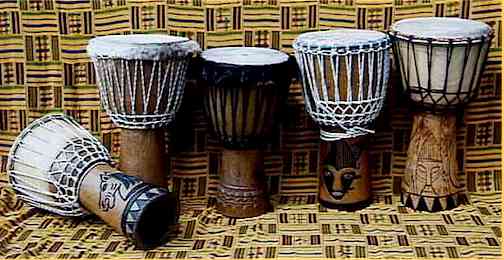
For a few centuries now, Malian music has echoed through West Africa. It has influenced the music of Guinea, the Ivory Coast, Sierra Leone, Mauritania and Chad to name a few and to some extent Malian music has influenced all of West Africa. Malian music can be derived from tribes such as the Fula Music, Djembe Music, Malinke Music, Taureg Music using violin, calabash, balafon, flutes and a number of handmade stringed instruments.
War and westernization are two of the greatest hindrances to the continuation of African music today. While so many indigenous Africans still respect their roots, western pop has infiltrated the cultured and caused many to adopt to the image. Throughout Africa musicians are abandoning the classic sound and melodies to sing pop versions of their cultural song. Civil wars kill off or displace music legends who take the elite skills of traditional music with them.
5. SUDAN:
The golden age of traditional African music came before and during the colonial era. Since technology was not as available as it is today, much of those materials from that time period were lost. After gaining their independence, many African countries fell under dictatorship rule which ultimately led to civil war. Wars did not only crippled the already fragile economy, they hindered the traditional music and dance culture from being practiced in their entirety.
Sudan’s historical music culture was interrupted by various impediments. Once a conspicuous music tradition known as the Zar, this tradition led off with musicians who were believed to be possessed by ancestral spirits. After centuries had past, the tradition was banned in the 1900s with ancient drums ceased from their players. A determinant was introduced, aimed at ending the spiritual aspect of Sudanese music. It encouraged a diluted version of the tradition which was stripped off of its spiritual component.
At the time, their Western backed government cracked down and imprisoned any musician who played the Zar with its spiritual component in it. To avoid this, legendary Sudanese musicians left the country and died in exile, taking with them, the knowledge of this ancient art. Since much of African art cannot be written down but only passed from one generation to the next through an oral tradition; this put a strain on the continuation of that aspect of the music.
Sudan is a main source of ancient African culture. Many tribes including the Mande speaking people migrated across West Africa from Sudan. However, their genealogy also consist of elements from the Middle East. Arab presence in Sudan contribute to her music and dance culture as well. In her diversity, Sudan wields more than 500 ethnic groups [tribes] which is the largest deposit of tribes in any one country in Africa. Sudanese music is lyrical; much of it is in the form of storytelling. One source states:
“Due to many years of civil war the culture is heavily influenced by neighboring countries. Many South Sudanese fled to Ethiopia, Kenya and Uganda. Most of those who remained in the country went north to Egypt, greatly assimilating Arabic culture. It is also worth noting that most South Sudanese kept the core of their culture even while in exile and diaspora. Traditional culture is highly upheld and a great focus is given to knowing one’s origin and dialect. Many musical artists from South Sudan use English, Kiswahili, Arabi Juba, their dialect or a mix of all. Popular artists like Yaba Angelosi sings Afro-beat, R&B and Zouk; Dynamiq is popular for his reggae releases; and Emmanuel Kembe sings folks, reggae and Afro-beat.” – Yabe Angelosi – Biography.
10 DISTINCT AFRICAN MUSIC & DANCE CULTURES PT. 2
6. LIBERIA
Liberia is one of the first African countries to be directly influenced by Western culture. It was founded by freed African-Americans who wished to avoid segregation and belittlement in the United States. However, after two devastating civil wars a little over hundred years later, Liberia was knocked back in time as foreign investors drag their feet to aide in its recovery which held the nation at a standstill.
This war lacerated nation aches in desperate penury. Today, electricity and clean water shortage are some of its most common problems among several tight squeezes. But these problems have not hindered its music and dance culture. Liberia still holds a profound connection with the United States whose flag and constitution are still the blueprint of its current political structure. American music had influenced Liberian youths many years before Africa caught on but this influence did not impede the essence of her traditional music.
The drummer could send an invite to a wedding, celebration of a new born, celebration of good harvest or the drummer could declare war or warn others of pending danger. The drummer could also announce the death of prominent people or summon a tribe to call on the gods for a particular reason. For these reasons, the listener must distinguish between the various situations by simply listening to the “talking drum.” The talking drum can also be used for fun to sing and dance. To note: this tradition is also practiced in Ghana.
Traditional Liberian Music and dance cultures are indigenous to the Grebo, Krahn, Loma, Mano, Gbandi, Kru, Via, Bassa and Sinoe tribes. Like Sierra Leone, Liberians also have a Poro society for boys but a Sandy society for girls. All rituals and cultural ethics taught in these “Grebo Bushes” are secrets that will never be revealed to an outsider. However, during festivals and ceremonies outsiders are invited to enjoy the rich music and dance festival.
7. SIERRA LEONE:
Sierra Leone has a very majestic tradition in a tribal music culture and dance tradition known as Goombay Music. Formally known as Romarong, Sierra Leone ancient settlements saw many tribal inter-migrations from Eastern Sudan, the Fouta DJallon and Northern Sahara regions. Many of these tribes came to Romarong, which was then protected by a dense rainforest region, seeking refuge from foreign invasions that had toppled their former communities where new empires were being formed. The new empires sort to wipe out or enslave people who were esteemed chiefs and warriors. Thus the exodus to Romarong
Due to inter-migration of tribes, the exploitation of Portuguese and British explorers turned slave traders, a large wealth of culture was deposited in Sierra Leone. The music of the Poro [for boys, Bondo [Sierra Leone's Sandy society for girls] and Hunting [a community of hunters who utilize ancient African magic to hunt animals] secret societies and their dance rituals consist of traditional Sierra Leone music and dance culture.
Sierra Leone’s traditional music is performed with ceremonious and customarily revered Bondo, Poro and Hunting devils. The main genres of traditional Sierra Leone music can be categorized as Mende, Mandingo, Temne, Fula and Soso music. Earlier on, West Africans had welcomed Christianity, but were soon bitten by it when Christian missionaries and explorers whipped them into slave ships. Islam proved to be a safer alternative for Africans since they could maintain their traditional African and religious dogmas and be Muslims.
8. GHANA:
As evident in the popularity of Ghana’s symbolic Kente cloth,Ghana exerts its profound roots in Africa as the home of the monumental Ghanaian Empire that reigned for centuries in the region. Ghana has also seen the rise of a prominent Ashanti kingdom. After the British despoiled its gold coast, she embraced the Pan-Africa movement. Like The Gambia, she is among few peaceful democracies in Africa. Among many historic legends, Ghana continues to lead Africa in the preservation of well-defined African music and dance cultures.
Easy Track Ghana is quoted as saying:
“While the style may differ between north and south, traditional music, dance and ceremony are ritualized events occurring at funerals, ceremonies, festivals, weddings and other public and private gatherings. Drums and gong-gong are more prevalent in the south, while string instruments and the calabash are more used in the north.”
When US President Barack Obama went to the Sub-Saharan region, he made his visit a symbolic one by visiting one of Ghana’s most heart rending monuments known as the fortress of Cape Coast Castle. Enchained Ghanians had been crammed into its dungeons and shipped out through its “Door of No Return” which opened into the sea where slave ships awaited.
Ghanaian musicology is divided into two sections. Northern Ghana shares its musical culture with Niger, Burkina Faso and Northern Togo where stringed instruments are commonly played. Southern Ghanaian musicology of the Akan and Ga tribes play drums. The xylophone or Balafon is Africa’s piano which is found in all traditional African music. African music instruments are handmade.
9. NIGERIA:
Sculpted with deep African content is the leadership and values Nigeria self sustained with its population of 140 million. They have more than enough audience to uphold their tradition. From a variety of rich cuisine to an array of distinguishable attire, Nigeria houses about 500 tribes in 35 federal states. Their main ethic groups are: Igbo, Yoruba and Hausa. They developed a sharp wit and their image is often tainted in Western media. Along with Ghana, she stands as another one of Africa’s main cultured hubs. Most significant to West Africa is her vast peacekeeping force and multitude of natural resources. And in many cases Nigerian music and dance represent the embodiment of African musicology.
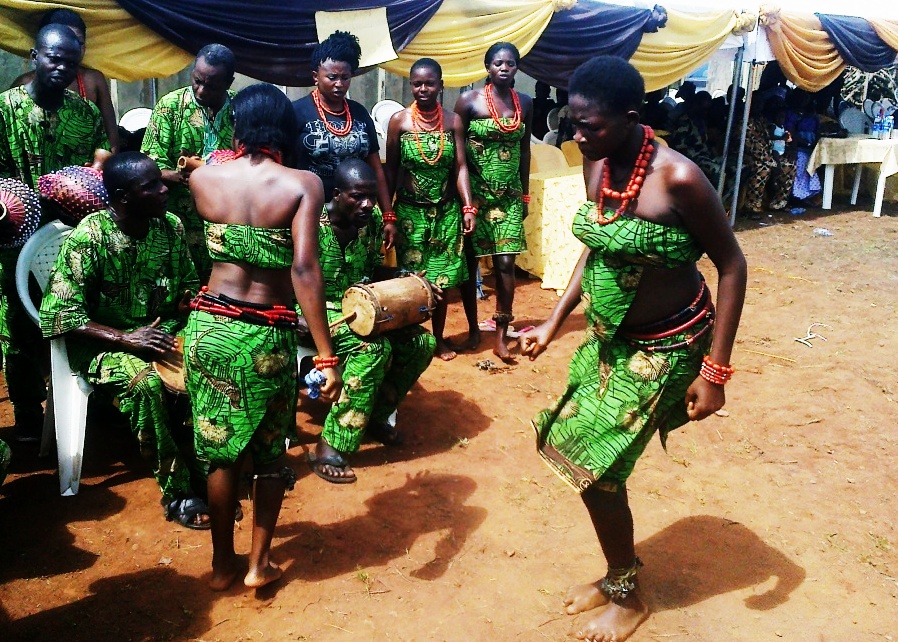
The World Music Network puts it this way: “Nigeria is unrivaled in Africa in terms of cultural output. Yet, except for a few internationally known African pop icons (Fela Kuti, Sunny Ade and Femi Kuti), the country’s artistry remains a mystery to all but the most ardently adventurous listeners.” As a cultural giant, her Yoruba tribe is famed for their detailed drumming, while core elements like lyrics run deep from the soul. Yoruba instruments include; shekere, bembe, abinti, koso, agogo and sakura.
Igbos play a wide variety of sorts but their main sound is the ikoro, or slit gong and the udu pot drum. Nigerians also play traditional stringed instruments like the molo and the kontigi of the Hausa. In Nigerian musicology drumming percussion are either the dundun or the bata. Some of the most common genres of Nigerian music are: Fuji Fever, Juju Music, Afro Beat and Apala. If one is interested in African traditional music and dance Nigerian culture is a must see.
10.Cameroon:
Cameroon has a rich and diverse culture made up of a mix of about 250 indigenous populations and just as many languages and customs. The country is nicknamed "Little Africa" as geographically, Cameroon consists of coastline, mountains, grass plains, forest, rainforest and desert, all of the geographical regions in Africa in one country. This also contributes to its cultural diversity as ways of life and traditional food dishes and traditions very from geographical region to geographical region.
Partly through the influence of colonialism, there is a national culture, and two distinct regional cultures: the Anglophone and Francophone regions, which primarily speak English and French
Since the Cameroon was formerly under French and British rule, the official languages are French and English. There are also numerous endemic living languages spoken by the people that reflects the diversity of the country.[1] These languages include the Akoose language, the Gbaya languages, the Fula language, the Gyele language, the Koonzime language, the Mundang language, the Ngiemboon language, and the Vengo language. The Vernacular languages from the ethnic groups in Cameroon are well over 200. Some of them are Ewondo, Beti, Bamileke, Duala and Arabic in the North and Far-North regions
Cameroon is a true crossroads of African art and culture
Cameroon is a true crossroads of African art and culture


