Friday, 3 July 2015

I Will Slit Your Throat,' Gambian President Tells Gay Men


Out in Africa: How should Africans respond to homosexuality


 Homosexuality in Africa is a most controversial subject and in recent weeks, the issue has fired up in the media and psyche of Africans. Here’s one take on it.President Yahya Gammeh, has threatened to personally slit the throats of any man who wants to marry another man in Gambia,

 Gambian President Yahya JammehIronically, the personal threat made against his gay countrymen in a public speech was supposed to be about "fostering a healthy atmosphere" for Gambia's youth.
"If you do it [in the Gambia] I will slit your throat — if you are a man and want to marry another man in this country and we catch you, no one will ever set eyes on you again, and no white person can do anything about it," said Jammeh, speaking in the Wolof language at Farafenni, a market town near the Senegal border.

Jammeh's reference to "no white person" is likely a jab at Western diplomats and governments, according to his former press secretary, Fatu Camara. Camara now works as a journalist, after fleeing the country to escape sedition charges. 

But the president isn't the only Gambian official proudly showing his homophobic tendencies, Camara told Vice News. Jammeh's foreign minister recently told a European Union gathering that her boss would follow international law, but that the government would "protect religious beliefs and traditions."
"If you read in between the lines, the foreign minister is also trying to say, 'We are not going to accept homosexuality,' " Camara explained to Vice News. "The president already made the Gambians believe that the reason the EU cut funding to him is because of homosexuality."
Jammeh, infamous for his frequent, violent, antigay public statements, signed a law that calls for lifelong prison sentences for acts of "aggravated homosexuality" last year. His roll call of homophobic vitriol includes a speech at the U.N. in which he said homosexuality was one of the three biggest threats to human existence, as well as a threat to kill LGBT asylum-seekers trying to flee the country

 
 A comprehensive demographic study of more than 200 countries finds that there are 2.18 billion Christians of all ages around the world.* Many Africans consider themselves Christians – in fact about one in every four Christians globally lives in sub-Saharan Africa (24%).

In recent times however it’s not their good and gracious ministering that has come to the fore but their divided attitudes towards the gay and lesbian community across the continent.
The storm was whipped up earlier in the year when on January 7 2014, dozens of Nigerians were arrested after the country passed a draconian anti-gay law that punishes homosexuality with a life sentence in prison. Global gay rights watchdogs claimed the bill was the work of U.S. Evangelicals.
Soon after, author Chimamanda Ngozi Adichie took on the common arguments posed by supporters of the bill, speaking out against the laws that stated that being gay is “un-African”.


Image result for chimamanda ngozi adichie
 In her words – ‘The new law that criminalizes homosexuality is popular among Nigerians. But it shows a failure of our democracy, because the mark of a true democracy is not in the rule of its majority but in the protection of its minority – otherwise mob justice would be considered democratic.

Not long after, Binyavanga Wainaina, one of Africa’s leading literary figures, responded to the wave of recent anti-gay laws on the continent by publicly outing himself in a short story. He published ‘I Am a Homosexual, Mum’, to coincide with his 43rd birthday. Calling it the “lost chapter” of his 2011 memoir, it is a re-imagining of the last days of his mother’s life, in which he goes to her deathbed and tells her the truth about his sexuality.
 

On February 25, 2014 Uganda’s Yoweri Museveni outlawed homosexuality in his country. Museveni called homosexuals ‘mercenaries’ and signed one of the world’s toughest anti-gay laws raising the ire of gay and lesbian activists and supporters worldwide.
However, it really should not come as a great surprise for there’s apparently another agenda at work here. Despite the tutting of the West, and the efforts of Uganda’s small – and brave – gay rights community, the law has the backing of large numbers of Uganda’s conservative churchmen.
The president did not opt to quietly sign the bill over the weekend, while the world was distracted by the revolution in Ukraine. Instead, he wanted “the full witness of the international media to demonstrate Uganda’s independence in the face of Western pressure and provocation”.
In other words, this was no longer just about gay rights, in Mr Museveni’s view, but about the West lecturing an African country on how to run its internal affairs, in this case on a matter of sensitive sexual morality.
The next day, a Ugandan newspaper (if we can call it that, for its objectivity has long since been abandoned) listed 200 people it accused of being gay. “Exposed!’’ the headline of the Red Pepper tabloid read, beneath photographs of Ugandans it said were gay, as well as reporting on lurid stories of alleged homosexual actions. (If the idea was to humiliate and dehumanise the gay and lesbian community, then Uganda is doing a great job of it.)


The Republic of Mozambique has reason to be proud this week.
The Southeast African nation has officially decriminalized relationships between people of the same sex, reports the Washington Blade.
A law that went into effect Tuesday overturned a colonial-era law that forbade “vices against nature,” which many interpreted to include homosexuality.
Lawmakers approved the amendment to the 1886 law in December with support from the former president of Mozambique, Joaquim Chissano.
International LGBT activists applauded the amendment, including Ty Cobb, the global director for the Human Rights Campaign.
“LGBT advocates in Mozambique worked tirelessly with the broader civil society community to ensure that the reform of Mozambique’s criminal code would create a more equal Mozambique for all,” he said. “Their work serves as a model for success that inspires all of us.”
However, activists on the ground emphasized the work that still must be done to achieve LGBT equality.
Danilo da Silva, who helms Lambda, an LGBT group based in the country’s capital, called the penal code “absurd” and “outdated” in an interview with the Blade. He said it “reflected the bigotry and the morals of former colonial masters.”
However, he bemoaned the failure of the government to add specific protections against LGBT discrimination in the new law. He also expressed little optimism that the legislative move would have an impact on people in their everyday lives.


 gay2


Map of the 79 countries with laws against sexual relations between people of the same sex. 

The International Lesbian, Gay, Bisexual, Trans and Intersex Association, or ILGA, lists 75 countries with criminal laws against sexual activity by lesbian, gay, bisexual, transgender or intersex people (LGBTIs), but that’s an understatement.
The death penalty can be imposed for same-sex intimacy in eight of them.
This blog’s similar 79-country list is below, including links to this blog’s coverage of each country.
The difference between the two lists is that ILGA mentions but does not include four political entities that are on this blog’s list:
  • Indonesia, where two large provinces outlaw homosexual acts; and
  • Three political entities that have anti-LGBT laws but that aren’t accepted as countries by the international community — the Cook Islands, a self-governing country whose residents all have citizenship in New Zealand; Gaza/Palestine; and the territory of Syria and Iraq that is controlled by Daesh/ISIS/ISIL troops.
This blog’s total would be 81 countries if it were to include Russia and Lithuania, two countries that do not have laws against homosexual acts but instead have repressive laws against “propaganda of homosexuality.” Libya and Nigeria have similar anti-propaganda laws, but also prohibit same-sex relations, so they are already on the list.
Back in 2012, based on a separate, nearly complete count, St. Paul’s Foundation for International Reconciliation cited a total of 76 countries.  That list was used in that year’s Spirit of 76 Worldwide program aimed at repealing those laws. It also inspired the name of this blog — “Erasing 76 Crimes.”
ILGA lists eight nations that provide for the death penalty for same-sex intimacy, “but only five (Mauritania, Sudan, Iran, Saudi Arabia and Yemen)  actually implement it. But a sixth State, Iraq, although not in the civil code clearly has judges and militias throughout the country that issue the death sentence for same-sex sexual behaviours. Further, some provinces in Nigeria and Somalia officially implement the death penalty. We are also aware that in the Daesh (ISIS/ISIL)-held areas the death penalty is implemented (although a non-State actor, we list it here). Brunei Darussalam is due to activate the death penalty for same sex sexual acts in 2016, but it seems likely that like Pakistan, Afghanistan and Qatar although it is on the statute, it will not be implemented.”
These are some of the recent changes in the list:
  • The tiny nations of Palau in the western Pacific Ocean and São Tomé and Príncipe, in the Atlantic Ocean off the shores of central Africa, recently decriminalized homosexuality and were dropped from this list in 2014.
  • Mozambique's LGBTI advocacy organization, Lambda, can celebrate the repeal of the country's anti-gay law, but it has not yet won its battle for official government recognition, which it has been seeking since 2008. (Photo courtesy of Lambda)
    Mozambique’s LGBTI advocacy organization, Lambda, can celebrate the repeal of the country’s anti-gay law, but it has not yet won its battle for official government recognition, which it has been seeking since 2008. (Photo courtesy of Lambda)
    Mozambique, on the southeastern coast of Africa, with a population of 24 million, adopted a new Penal Code in the second half of 2014 and was dropped from this list in early 2015.
  • Lesotho also was dropped from the list after adopting a new Penal Code, which apparently eliminated the nation’s former common-law crime of sodomy.
  • Iraq was added to the list, although it does not have a civil law against same-sex relations. But in practice Iraq defers to Sharia judges who, as ILGA notes, “continue to order executions of men and  women for same-sex sexual behaviour.”
  • Chad was briefly added to the list — by mistake — because of a proposed new Penal Code that would provide for 15 to 20 years in prison and a fine of 50,000 to 500,000 CFA francs (US $86 to $860) “for anyone who has sex with persons of the same sex.”  Chad was removed from the list after ILGA realized that the proposed change had been approved in 2014 by Chad’s cabinet, but not by the president.
  • Daesh (or ISIS / ISIL) was added to the list because it publicizes its executions of  LGBTI people in the the areas of northern Iraq and northern Syria held by its troops.  ILGA states that “the Nusr [‘Victory’ in Arabic] website, which claims to be the website of the Islamic caliphate, has a section on Legal Jurisprudence (evidence-based rules and the penal code). One of the pages under this section is dedicated to “punishment for sodomy”, which states: “the religiously-sanctioned penalty for sodomy is death, whether it is consensual or not. Those who are proven to have committed sodomy, whether sodomizer or sodomized, should be killed…”.
Here is this blog’s list of 79 countries and independent political entities with anti-homosexuality laws, with links to the blog’s coverage of them:
AfricaPrison bars
1 Algeria
                    2 Angola
                                            3 Botswana
                                                                     4 Burundi
                                                                                       5 Cameroon
                                                                                                                    6 Comoros
                                                                                                                                            7 Egypt
                                                                                                               8 Eritrea
                                                                               9 Ethiopia
                                                10 Gambia                 11 Ghana
12 Guinea
13 Kenya
14 Liberia
15 Libya
16 Malawi (enforcement of law suspended)
17 Mauritania
18 Mauritius
19 Morocco
20 Namibia
21 Nigeria
22 Senegal
23 Seychelles. Seychelles does not prosecute anyone under their anti-sodomy law, has promised to repeal it, but has not yet done so. A same-sex wedding was conducted in Seychelles on June 13, 2015, on British territory (the British high commissioner’s residence). Seychelles laws currently have no provision for marriage equality.
24 Sierra Leone
25 Somalia
26 South Sudan
27 Sudan
28 Swaziland
29 Tanzania
30 Togo
31 Tunisia
32 Uganda
33 Zambia
34 Zimbabwe
Asia, including the Middle East

35 Afghanistan
36 Bangladesh
37 Bhutan
38 Brunei
39 Daesh (or ISIS / ISIL)
40 India
41 Iran
42 Iraq
43 Kuwait
44 Lebanon (law ruled invalid in one court)
45 Malaysia
46 Maldives
47 Myanmar
48 Oman
49 Pakistan
50 Palestine/Gaza Strip
51 Qatar
52 Saudi Arabia
53 Singapore
54 Sri Lanka
55 Syria
56 Turkmenistan
57 United Arab Emirates
58 Uzbekistan
59 Yemen
Americas
60 Antigua & Barbuda
61 Barbados
62 Belize
63 Dominica (But see “Dominica leader: No enforcement of anti-gay law” )
64 Grenada
65 Guyana
66 Jamaica
67 St Kitts & Nevis
68 St Lucia
69 St Vincent & the Grenadines
70 Trinidad & Tobago
In the United States, anti-sodomy laws were ruled unconstitutional by the U.S. Supreme Court in 2003, but they are still on the books in 13 states: Alabama, Florida, Idaho, Kansas, Louisiana, Michigan, Mississippi, North Carolina, Oklahoma, South Carolina,  Texas, Utah and Virginia. Conservative state legislators refuse to repeal the laws and, in some cases, police still enforce them.  In the past several years more than a dozen LGBT people were arrested for violating those laws, but the arrestees were freed because prosecutors won’t seek convictions based on defunct laws.
Oceania
71 Cook Islands
72 Indonesia (Aceh Province and South Sumatra)
73 Kirbati
74 Nauru
75 Papua New Guinea
76 Samoa
77 Solomon Islands
78 Tonga
79 Tuvalu
Europe
No country in Europe has a law against homosexuality. The last European location with such a law was Northern Cyprus (recognized as a country only by Turkey), which repealed its law in January 2014.
Also in Europe and worth mentioning but not on that list of countries with laws against homosexuality are:
  • Russia, which enacted an anti-gay propaganda law in 2013 prohibiting any positive mention of homosexuality in the presence of minors, including online;
  • Lithuania, which has a similar law.
  • Ukraine, which has considered, but so far has not adopted a similar law against “gay propaganda.”
  • Moldova, which adopted and then repealed such a law in 2013.
In addition, in central Asia, Kyrgyzstan in October 2014 was on the verge of adopting an anti-gay “propaganda” law harsher than that in Russia. If that bill becomes law, any type of distribution of positive information on same-sex relations, not just discussions in the presence of a minor, would become a crime punishable by fines and a jail sentence.

Thursday, 2 July 2015

FREEDOM, IDEALS AND DISCOURTESIES IN JOURNALISM

 journalism


If we’re truly for peace, justice and unification we cannot be ignorant or arrogant in our own flaws. Are our ideals more legitimate than others? In an international system of government, law enforcement and media, we cannot fail to distinguish the difference between ideals and freedom. We must respect that there is a thin line between freedom and ideals and some discourtesies in journalism. No matter what kind of freedom you advertise; freedom of expression, press freedom, you name it. How we insist that provocative attitudes and influential reports are imposed on others cannot be with disregard when the same is expected of us. There must be a place where we draw the line.


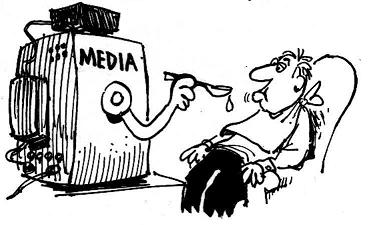
watching-tv-clipart-RiABzMLiL
 Psychological manipulation is an assault. Within the main cultures, creed or religions of Asia, the Middle East and Russia, respect for political and religious leaders is warranted. Slandering of authority figures or blasphemy of prophets are as serious as pedophilia, adultery or animal cruelty in the West. This is their ideal. It does not mean that they encourage pedophilia, adultery or cruelty to animals. it equates the scale of seriousness that is attributed to such acts. Just because we have a superior military with a mass media does not give us the freedom to disregard their leaders, Holy Prophet/s or their sacred ideals. If so, they too will disregard our leaders and our ideals.


138-Mad-Man-Reading-Newspaper-Free-Retro-Clipart-Illustration

 Press freedom has limits because no one is free to impose what they believe is grotesque. Remember, democracy is about the people, not the media or a unilateral idea – the people. Besides, we should also note that our press is blatantly bias when it comes to its government, law enforcement and corporate interests. Therefore, our media is expected to show the same respect toward the governments, law enforcement, established religion, ideals or corporate interest of other countries. When we decide to impose our ideals on them, we ask for war. In this context, we see that the main point is the LIMITATION of our freedom as it relates to the respect for the other ideals around the world. Basically, we are not the only ones with sensitive ideals.


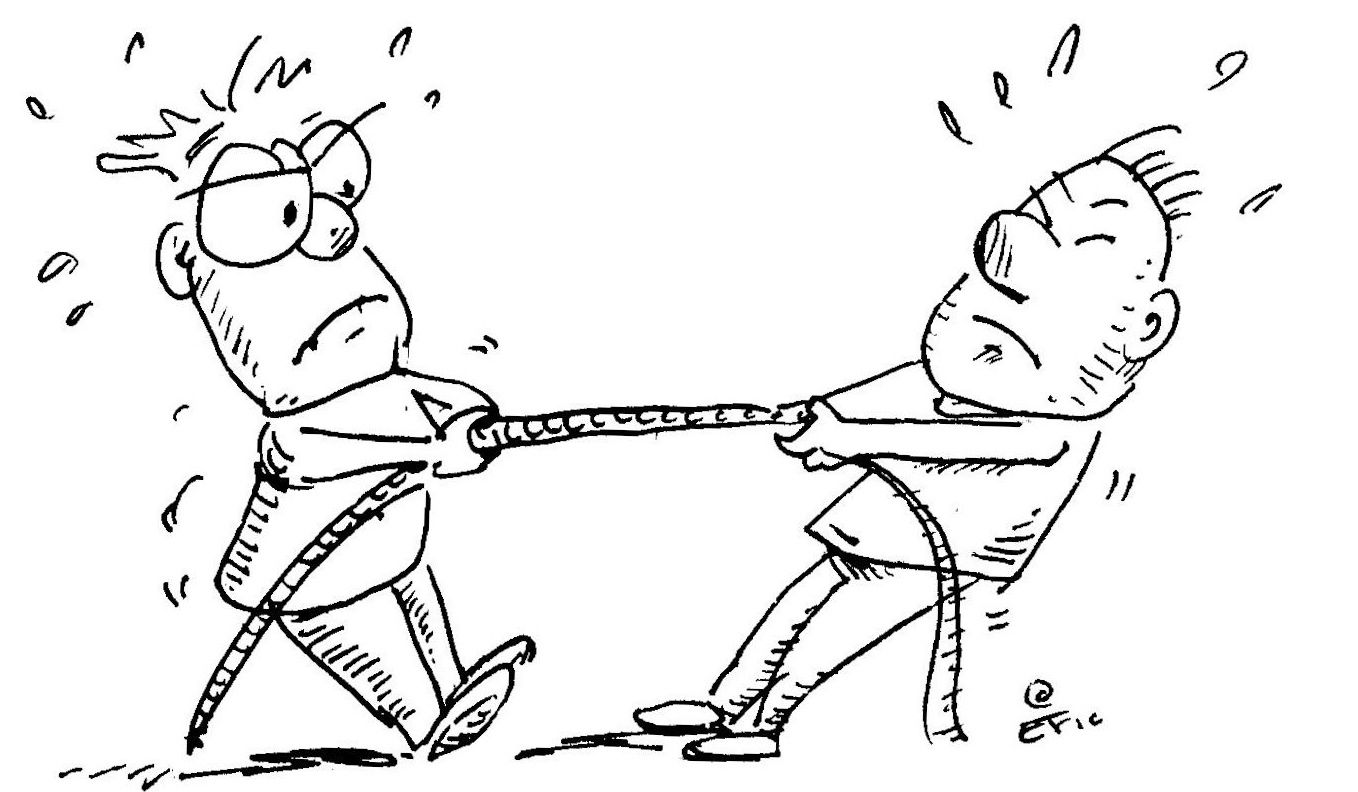
tug_of_war_clipart4


This is far too crucial! This is exactly why China, North Korea, Iran and other Nations are our enemies now. Because we refuse to accept their leaders, religious system and IDEALS while using our mass media to impose ours on them. What’s to stop those countries from banding together to attack us? As far as I condemn any and all kinds of violence, cruelty and contempt for human rights, I also do not support pedophilia, racism, cruelty to animals in the name of culture, ideals or religion. That said, the truth remains constant that, we must respect others as they respect us. We must be sensitive to the grotesque nature of our actions towards them and their ideals. Our media must be respectful.
ALL murders and violators of human rights must be brought to justice!

Wednesday, 1 July 2015

Why the obsession with lighter skin?

Here was an ugly little girl asking for beauty. A surge of love and understanding swept through him, but was quickly replaced by anger. Anger that he was powerless to help her. Of all the wishes people had brought him — money, love, revenge — this seemed to him the most poignant and the one most deserving of fulfillment. A little black girl who wanted to rise up out of the pit of her blackness and see the world with blue eyes.” — Toni Morrison, The Bluest Eye
white skin denciaDencia is a Nigerian pop star who is becoming better known for her skin cream, Whitenicious. The product sold out within 24 hours of its release.
The singer has been criticised both for promoting the dangerous practice of skin bleaching, and for her appearance in the accompanying advertisement to the right, where she appears to have either been photoshopped white or undergone radical skin bleaching, or both. (Let’s not even start on the blond wig … *sigh*)
The popularity of Whitenicious is not surprising given that 77 percent of Nigerian women (and many men) use some form of lightening product. Sadly, Nigeria is not alone in its increasing intolerance towards darker skin tones. Skin lightening potions are remarkably popular in India (where nearly 61 percent of all skin-care products contain lightening agents), the Caribbean, China, Latin America, and amongst African-Americans.
Lupita Nyong’o on a normal day, and as she appeared on the cover of Vanity Fair. Photo: Getty, Vanity Fair

So what is driving this obsession with lighter skin?

In a word: colourism. Coined by writer Alice Walker, colourism refers to discrimination within communities of colour towards those with darker skin. The preference for white skin is so firmly entrenched, two-thirds of Nigerian men saying they would prefer a lighter-skinned wife.
According to African-American author Iyanla Vanzant, the roots of colourism can be traced back to slavery. As black female slaves were ‘bred’ with their white owners, their children became successively lighter skinned and received preferential treatment. Darker skinned slaves toiled in the fields as their lighter counterparts were permitted indoors to service the ‘mistresses’ of the house.
 Similar stories occurred in India during colonisation when fairer Indians, who more closely resembled their European colonisers, were favoured over their darker counterparts. Fair skin became associated with wealth, power and status, and darker skin with poverty, backwardness, and field work.
It is vital to recognise these origins of colourism in any discussion of it. Vanzant calls colourism, “A consequence of internalisation of a white-dominated society’s entrenched white racial preference.”
In the Caribbean, the minority light-skinned community forms the majority of the ruling elite. This is, according to Caribbean-born writer Elizabeth Pears, “the effects of generations of wealth and privilege and marrying the ‘right’ people from the ‘right’ (and light!) families.”
In India, famed commercial director Prahled Kakkar admits that fair people are routinely cast over darker skinned rivals. “I often fight with clients if I think one (dark skinned actor) is a better performer, but clients are very open about not wanting to take what is seen as a risk.”
Dark skin is also seen as a risk in the west as the magazine industry’s attitude to black skin attests. Most recently Vanity Fair has come under fire for apparently lightening the skin of 12 Years A Slave star Lupita Nyong’o by several shades. Some claim it is just a ‘trick’ of the lighting, but regardless, the effect remains the same.
“One glaring omission is the role of colonialism and its consequences in introducing and reinforcing ‘colourism’. While it is uncomfortable to admit that white privilege was built on the back of oppression and slavery of people of colour, not doing so means we are only making token gestures to address these issues.”
Other stars who appear have been subjected to the lightening treatment include Gabby Sidibe and even Beyonce, who would already pass the notorious ‘paper bag test.’
white dark skin light skin 2In the early 1900s to the 1950s, African-Americans (who had by now internalised white society’s preference for lighter skin), held ‘paper bag parties’, pinning a brown paper bag to the front door; anyone whose skin was darker than the bag was denied entry. This ‘test’ was even used to determine admission to historically black universities and colleges. The implication is clear. The closer to white you are, the more intelligent, the more beautiful, the more acceptable.
Colourism is a system of discrimination that privileges light skin, Anglo features, and “good hair,”. For African Americans the reality of colourism is present daily - a remnant of slavery, embedded in America’s consciousness since the antebellum period. As black social scientist E. Franklin Frazier notes, in a controversial study of the black bourgeoisie in the 1950s, mulattoes (blacks with white ancestry, often referred to as “biracial” today) have lived a privileged existence when compared with their “pure black” counterparts since chattel slavery. Fair-skinned blacks, or “house Negroes,” were often given additional privileges, such as working indoors and, at times, the opportunity to learn to read and to be emancipated by their white fathers, whereas dark-skinned slaves, or “field Negroes,” often worked in the fields and had more physically demanding tasks.
The internalisation of this “field Negro/house Negro” mentality and valorisation of light skin tones continues to systematically affect the lives of African Americans and greater society in both overt and covert ways. While all African Americans are subject to certain kinds of discrimination and second-class citizenship, the intensity, frequency, and outcomes of this discrimination vary drastically by skin tone, and there are far greater “benefits” that come with lighter skin. Research shows that skin-color hierarchies operate in schools (some teachers respond more positively to light-skinned students and parents), dating and marriage markets (light-skinned black women are more likely to marry spouses with higher levels of education, occupational prestige, or income than their darker-skinned counterparts), the labor market (lighter-skinned blacks are more likely to be hired for jobs than darker-skinned blacks with same qualifications), and the criminal justice system (darker-skinned blacks have more punitive relationships with the criminal justice system compared with their lighter counterparts). As a result, light-skinned African Americans continue to earn more money, complete more years of schooling, marry “higher-status” people, live in better neighborhoods, and serve shorter jail sentences than dark-skinned African Americans.
This internalisation of the preference for whiteness was highlighted in the famous Clark Doll experiments of the 1940s, in which dark-skinned African-American children were presented with two dolls and asked to choose which dolls were prettier and smarter, and which doll was ‘bad.’ Overwhelmingly, the kids chose the white doll in the first two categories and the black doll in the last. When asked why this doll was bad, they responded ‘Because she’s black.’
This experiment was the inspiration for Dark Girls, a 2010 documentary exploring the effects of colourism on African-American women. Heartbreaking testimonials include a women’s pain when a pregnant friend quips, ‘Lord, I hope she don’t come out dark’ and a child admitting she doesn’t like ‘to be called black.’
However colourism doesn’t just happen in Africa or America. In the Arab world the discrimination is not as historically entrenched but there is no doubt that a shara, or fairer, light-haired (and preferably coloured-eyed) woman is considered more beautiful than an olive or brown-skinned samra. Some mothers even frequently implore their children not to spend time in the sun should their already olive skin get darker.
Mylinda Morales, now a yoga teacher in Florida, tells a similar story amongst Hispanic farmhands in America: ‘There is an incredible amount of shame about being a migrant farmworker. My mom didn’t want us getting “prieta” – dark coloured or tanned. We would wear a long sleeve shirt with a long sleeve dress shirt over that, heavy blue jeans, gloves, a large hat and sunglasses. And the temperature would be in the 100s (30+ C).’
When MyLinda got married to a keen waterskier and joined him on boating trips, her mother would, ‘get so upset. Every time I would visit her, she would make an awful face and say I “look so dark.’”
white dark skin light skin
And where does white society fit into all this? Consider this study that found white people misremember intelligent black men as being lighter-skinned than they actually are. There remains an underlying assumption that the lighter your skin, the more intelligent and less threatening you are.
This undeniable bias toward lighter skin has also left some lighter skinned members of a community on the receiving end of discrimination for presumed favouritism. One SBS Insight episode examined how some Indigenous (and light skinned) Australians are forced to  ‘prove’ their aboriginality.
Likewise, light-skinned African-Americans on a recent Oprah special claimed they suffer the usual racist insults aimed at blacks, as well as taunts (such as ‘light-bright’) from darker blacks. ‘But we’re still black in America,’ one woman implored. ‘None of us feel advantaged.’
“It was their contempt for their own blackness that gave the first insult its teeth. They seemed to have taken all of their smoothly cultivated ignorance, their exquisitely learned self-hatred, their elaborately designed hopelessness and sucked it all up into a fiery cone of scorn that had burned for ages in the hollows of their minds — cooled — and spilled over lips of outrage, consuming whatever was in its path.” – Toni Morrison, The Bluest Eye
Colourism is oppression within oppression within oppression. This internalisation of ‘white’ as the beauty ideal, as the most intelligent and desirable form of humanity, has led to communities (which many outsiders would presume are united), facing their own battles with discrimination and alienation in a bid to access the few privileges white society is willing to grant them.
It’s difficult not to think that the spectre of slavery and colonisation will always haunt us, especially when so many still refuse to acknowledge the ways in which the past informs the present. Iyanla Vanzant reminds us that, ‘The first step to solving any problem is to admit there is a problem.’
Until we face this problem, then dangerous products like Whitenicious will only continue to flood the market some of them causing serious  skin ailments. Worse still we’ll potentially have a  generation of Africans who won’t know what it is to celebrate their skin colour in all its various shades, hues and glory.
“The color of your skin is not a cross you bear. It is beautiful.”

5 Facts We Learn From ‘Finding Fela’

felakutimain 
He was a lover, a fighter, a political activist, a polygamist, a thorn in the Nigerian government’s side, a bestselling recording artist, the basis for a hit Broadway show, a band leader, and most importantly, an African. Alex Gibney’s Finding Fela takes an in-depth look at the life and times of Fela Kuti, the legendary Afrobeat singer-songwriter who became a musical ambassador for his country and his continent.

Interspersing archival live footage of Kuti and his Africa 70 band with vintage interview clips, talking-head testimonials and a behind-the-scenes look at director/choreographer Bill T. Jones putting together Fela!, the 2009 Broadway musical that revived interest in the late Kuti and his music, the documentary presents a portrait of an artist as a fully committed, if flawed, man of the people. Both newcomers to Fela’s story and longtime fans will walk away with a handful of insights and unearthed info about the icon; here are five facts from Finding Fela that are worth singling out.

1. Fela’s world-beat music took inspiration from gospel music and Western jazz. It’s not unusual to think that the father of Afro-beat developed his sound and artistic sensibility solely from Africa’s rich musical heritage, but as the documentary emphasizes, there were some important Western influences that helped shape Fela’s work. One was gospel music, which his biographer Michael Veal (author of the invaluable
The Life and Times of an African Musical Icon) points out would have been introduced to Kuti at a young age; because Fela came from a well-to-do upper-middle-class family, they would have naturally been “Christianized” and thus familiar with the form.
If gospel heped to provide the “uplifting” sound of Afrobeat per Veal, it would be secular jazz music that would provide an even more significant influence. Having taken piano lessons since he was nine years old, the teenage Fela decided to study classical music at Trinity College of Music in London, after following his brother to Europe. It was in the city’s after-hours jazz clubs, however, that Fela discovered trumpet players such as Miles Davis and Dizzy Gillespie, and ended up taking up the instrument in order to replicate the twists and turns of bop. He started playing jazz when he returned to Nigeria, and was leading a “cool” jazz band when he met drummer Tony Allen, who’d help Fela develop what would become the signature Afrobeat sound.

 felakuti3

2. He became politically awakened not in Africa, but in Southern California.
Having traveled to Los Angeles in 1969 to perform and record an album, Fela began to fall in love with both the growing Black Power movement happening on the West Coast and the various nubile young Afro-American women he met during his extended residency. One object of his affection — author/musician/activist Sandra Izsadore (also known as Sandra Smith and Sandra Isidore) — would help awaken Kuti’s political consciousness to a staggering degree. In the film, Izsadore attests to “shaming” Fela into finding out more about his native land’s history of empowerment and turning him on to The Autobiography of Malcolm X, the writings of Marcus Garvey and other key books. By the time Fela returned to Africa, he was ready to add a rise-up sense of urgency to his songwriting and pass on his knowledge to his audience.

3. Musicians such as Paul McCartney, Stevie Wonder, and James Brown’s band were huge fans.
After returning from America, Fela proceeded to set up a number of bases of operations from which to compose his music and bring it to the people — including the Afrika Shrine, a club set up in a hotel that gave him a regular performance space and a pulpit. Visiting musicians would stop by, ranging from Stevie Wonder to various backing musicians from James Brown’s band (a nice cross-cultural exchange, given that Fela idolized the Godfather of Soul and borrowed a lot from the singer’s Afrocentric-funk playbook). But the most surprising testimony comes from Sir Paul McCartney, who caught a set at the Shrine and was floored. “We were the only white people there,” McCartney recalls on camera, “and it was very intense. When this music broke, I ended up just weeping. It was one of the most amazing musical moments of my life.”
felakuti1
4. Fela married 27 women out of a sense of “tradition.”
In the West, Fela is still largely known for two things: the influence of his Afrobeat music on artists such as Paul Simon and Vampire Weekend; and the fact that he married 27 women (!) in 1978 despite the fact he already had a wife. Not 27 women during the course of a year, but over the course of one day. The event made headlines and raised eyebrows all over the world, and the documentary features Fela explaining the decision in his own words: “I wanted it to be meaningful…to have a meaningful life. Tradition expects me to marry 27 women.” It’s a notion that Veal thinks is a bit suspect: “Polygamy exists in the traditional context with a very strict set of controls…it’s not like what Fela was doing, like you sing this funky music, and the young girls on the street love it and they flock to you, and you incorporate them into your household. That was a totally different thing.” One of Fela’s wives describes seeing another spouse on the bed with Fela, and when this other wife got up to leave, a third wife quickly jumped in and took her place.

5. Questlove “fears” the Afrobeat revival band Antibalas.
One of several celebrity talking heads that show up to testify to Fela’s greatness, Roots drummer/Tonight Show band leader/one of the coolest guys ever Ahmir “Questlove” Thompson recounts a story in which, having just relocated to New York from Philly, his website’s manager tells him he’s got to see this new Fela musical on Broadway. “I was turned off,” Thompson recalls, “and then she said the magic words: ‘And Antibalas [is] the band!’” The 10-piece Brooklyn-based collective have been the key players behind a burgeoning Afrobeat-revival movement; having modeled themselves after Africa 70, they were the ideal band to bring Fela’s complex, polyrhythmic sound to the stage show. “They are one of the few American bands that I fear,” Thompson admits, a surprising thing to hear from a guy who’s held his own with any number of top-notch musicians. Listen to the band perform a short set below, however, you’ll start to understand why the Roots drummer bows down before them.

Enlightening. Enjoy the trailer for ‘Finding Fela’ below.
https://youtu.be/937SQ8-6RV4


Welcome To Rufasca Blog (Universal Diametric): BLACK INVENTOR, THE INVISIBLE AFRICANS COVERED BY ...

Welcome To Rufasca Blog (Universal Diametric): BLACK INVENTOR, THE INVISIBLE AFRICANS COVERED BY ...: Mark E. Dean (born March 2, 1957) is an AfroAmerican inventor and a  computer  engineer. He was part of the team that developed the ISA bus...

Welcome To Rufasca Blog (Universal Diametric): The Difference between ''Secession'' and ''Separat...

Welcome To Rufasca Blog (Universal Diametric): The Difference between ''Secession'' and ''Separat...: Many confuse the political terms "secession" and "separation".There is a great difference between the two.  In i...